Velo
Independently built and shipped an app for iOS
Velo
Independently built and shipped an app for iOS
Velo
Independently built and shipped an app for iOS
Velo
Independently built and shipped an app for iOS

Year
2026
Role
Builder
Overview
Velo is a tactile timezone and unit converter for iPhone that I built and shipped end to end. Building it myself let me shape the interaction, feel, and product details directly as the app came together.
Company
Independent
Year
2026
Role
Builder
Velo is a tactile timezone and unit converter for iPhone that I built and shipped end to end. Building it myself let me shape the interaction, feel, and product details directly as the app came together.
Company
Independent
Year
2026
Role
Builder
Velo is a tactile timezone and unit converter for iPhone that I built and shipped end to end. Building it myself let me shape the interaction, feel, and product details directly as the app came together.
Company
Independent
Year
2026
Role
Builder
Overview
Velo is a tactile timezone and unit converter for iPhone that I built and shipped end to end. Building it myself let me shape the interaction, feel, and product details directly as the app came together.
Company
Independent


Motivation
Velo began with a simple problem: coordinating meeting times with friends and family across the globe felt like a scheduling puzzle. I wanted a faster way to look ahead and see how everyone’s day lined up. It was also the first time I felt I had enough leverage to take an idea all the way from concept to launch on my own. With that, I started prototyping.
Motivation
Velo began with a simple problem: coordinating meeting times with friends and family across the globe felt like a scheduling puzzle. I wanted a faster way to look ahead and see how everyone’s day lined up. It was also the first time I felt I had enough leverage to take an idea all the way from concept to launch on my own. With that, I started prototyping.
Motivation
Velo began with a simple problem: coordinating meeting times with friends and family across the globe felt like a scheduling puzzle. I wanted a faster way to look ahead and see how everyone’s day lined up. It was also the first time I felt I had enough leverage to take an idea all the way from concept to launch on my own. With that, I started prototyping.
Motivation
Velo began with a simple problem: coordinating meeting times with friends and family across the globe felt like a scheduling puzzle. I wanted a faster way to look ahead and see how everyone’s day lined up. It was also the first time I felt I had enough leverage to take an idea all the way from concept to launch on my own. With that, I started prototyping.
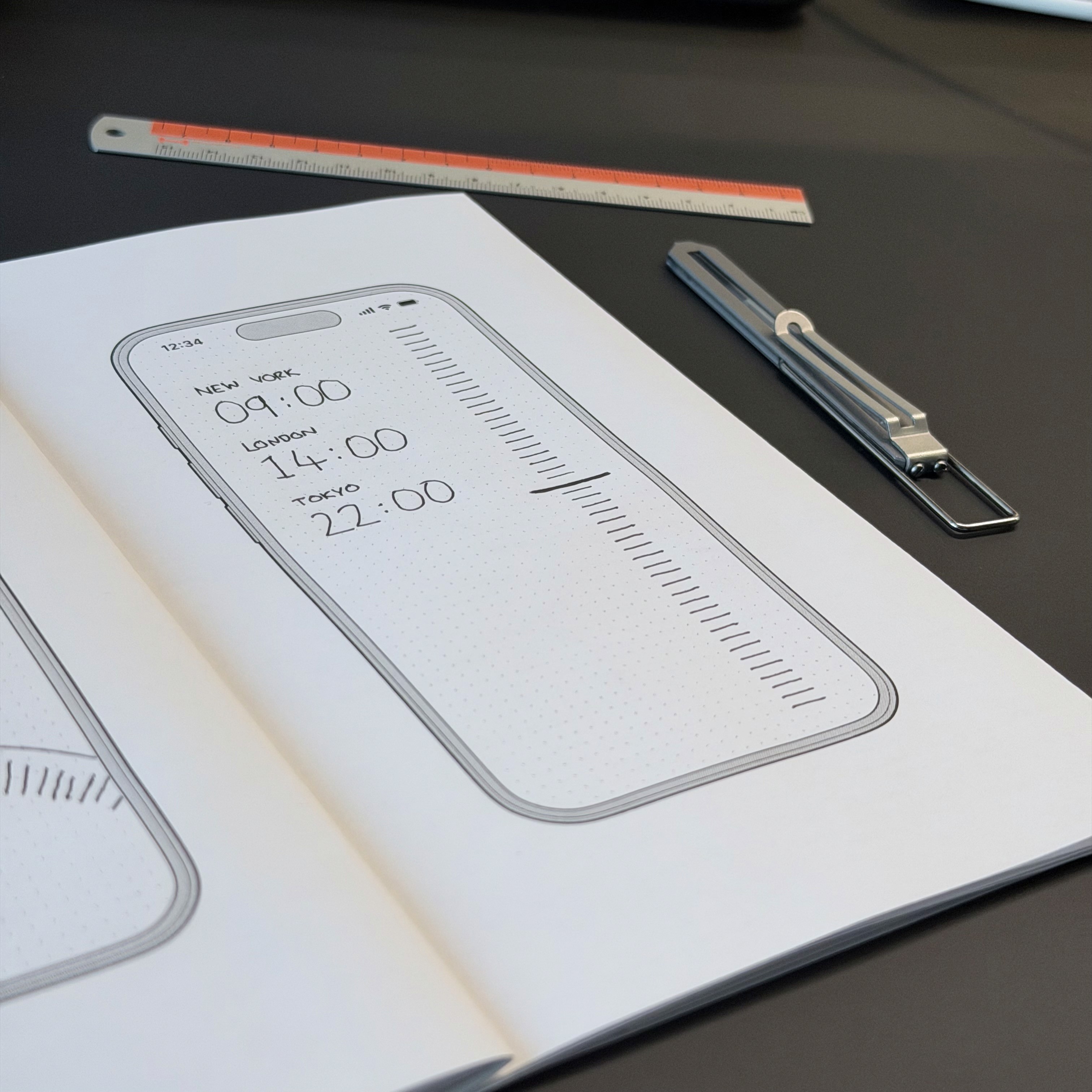
The initial idea was simple: a tactile ruler to scrub multiple time zones. With Cursor I had a working prototype in hand in hours.
The initial idea was simple: a tactile ruler to scrub multiple time zones. With Cursor I had a working prototype in hand in hours.
The initial idea was simple: a tactile ruler to scrub multiple time zones. With Cursor I had a working prototype in hand in hours.
The initial idea was simple: a tactile ruler to scrub multiple time zones. With Cursor I had a working prototype in hand in hours.
From sketch
From sketch


To code
To code

To prototype
To prototype
After building conviction in the idea, focus shifted to product feel: refining the ruler, haptics, and visual design.
After building conviction in the idea, focus shifted to product feel: refining the ruler, haptics, and visual design.
After building conviction in the idea, focus shifted to product feel: refining the ruler, haptics, and visual design.
After building conviction in the idea, focus shifted to product feel: refining the ruler, haptics, and visual design.

Precision and feel
The ruler is the primary control, so its behavior needed to feel deliberate. I tuned tick spacing, scroll momentum, magnetic snapping, and haptic feedback until it felt precise.
Precision and feel
The ruler is the primary control, so its behavior needed to feel deliberate. I tuned tick spacing, scroll momentum, magnetic snapping, and haptic feedback until it felt precise.
Precision and feel
The ruler is the primary control, so its behavior needed to feel deliberate. I tuned tick spacing, scroll momentum, magnetic snapping, and haptic feedback until it felt precise.

Clear typography
Large values had to stay readable while updating. I refined the scale and spacing, and used tabular figures to keep changing values stable while updating.
Clear typography
Large values had to stay readable while updating. I refined the scale and spacing, and used tabular figures to keep changing values stable while updating.
Clear typography
Large values had to stay readable while updating. I refined the scale and spacing, and used tabular figures to keep changing values stable while updating.

Coming together
As the pieces came together, Velo started to feel less like a prototype and more like an instrument: a focused UI, live values, and a tactile scale that felt accurate.
Coming together
As the pieces came together, Velo started to feel less like a prototype and more like an instrument: a focused UI, live values, and a tactile scale that felt accurate.
Coming together
As the pieces came together, Velo started to feel less like a prototype and more like an instrument: a focused UI, live values, and a tactile scale that felt accurate.
With a solid foundation in place, I explored if the ruler model could scale to other converter use cases. The interaction proved surprisingly adaptable.
With a solid foundation in place, I explored if the ruler model could scale to other converter use cases. The interaction proved surprisingly adaptable.
With a solid foundation in place, I explored if the ruler model could scale to other converter use cases. The interaction proved surprisingly adaptable.
With a solid foundation in place, I explored if the ruler model could scale to other converter use cases. The interaction proved surprisingly adaptable.
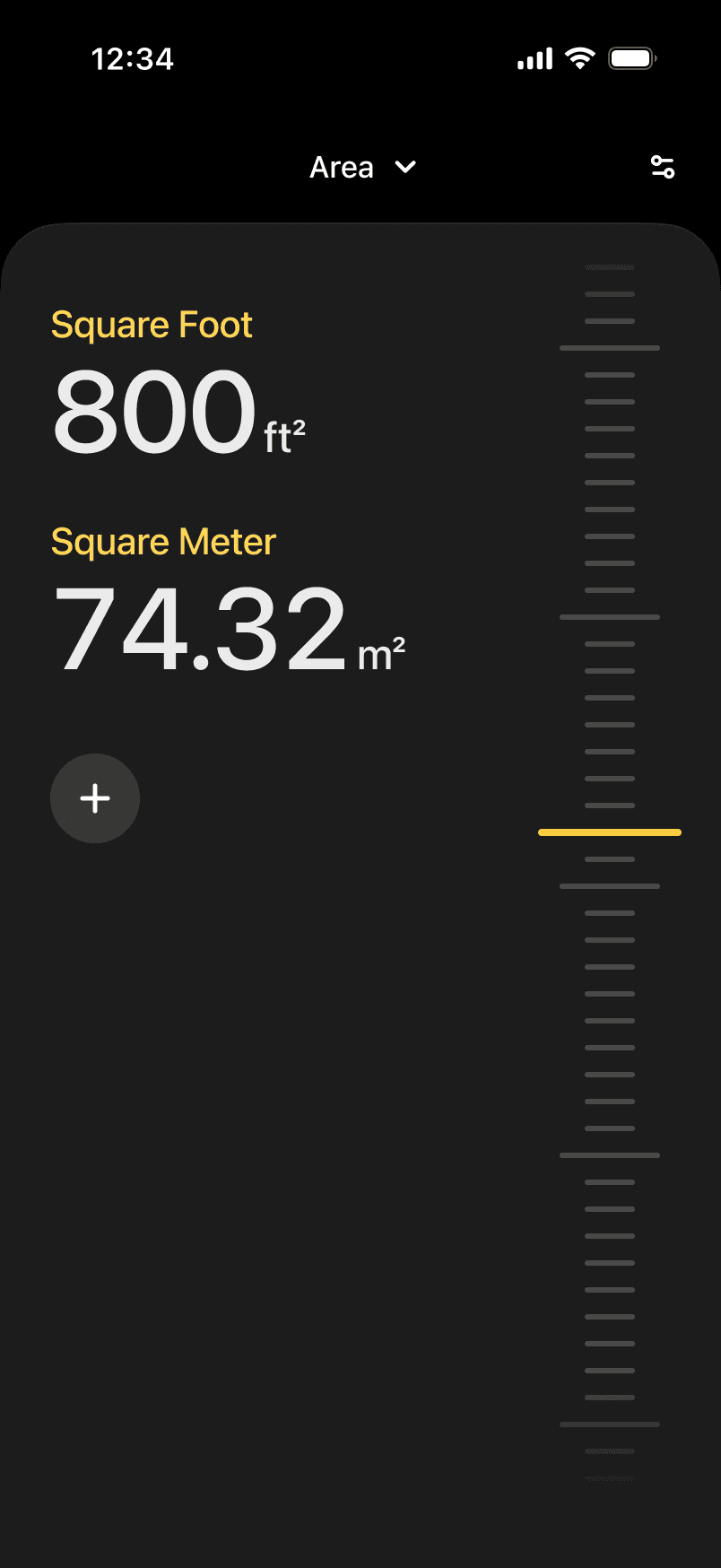
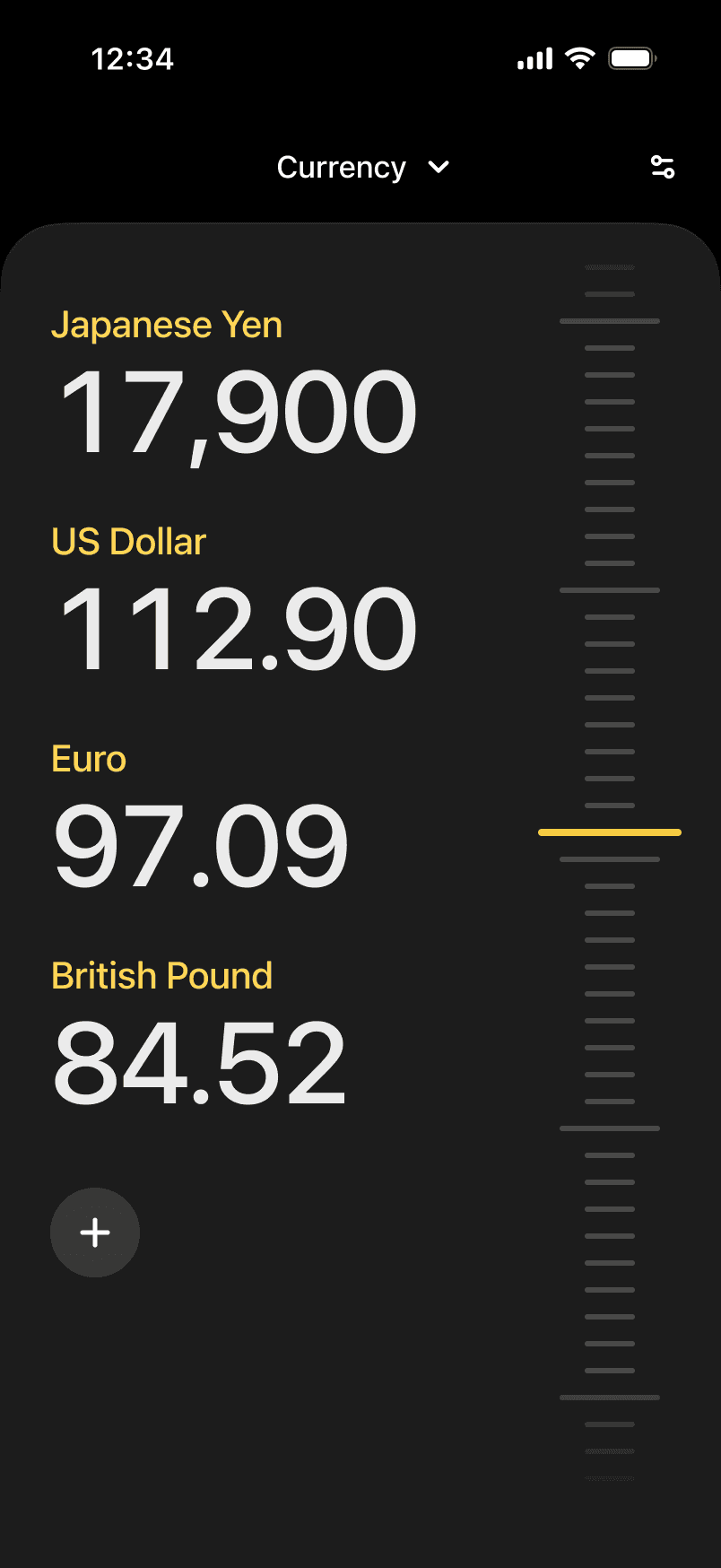
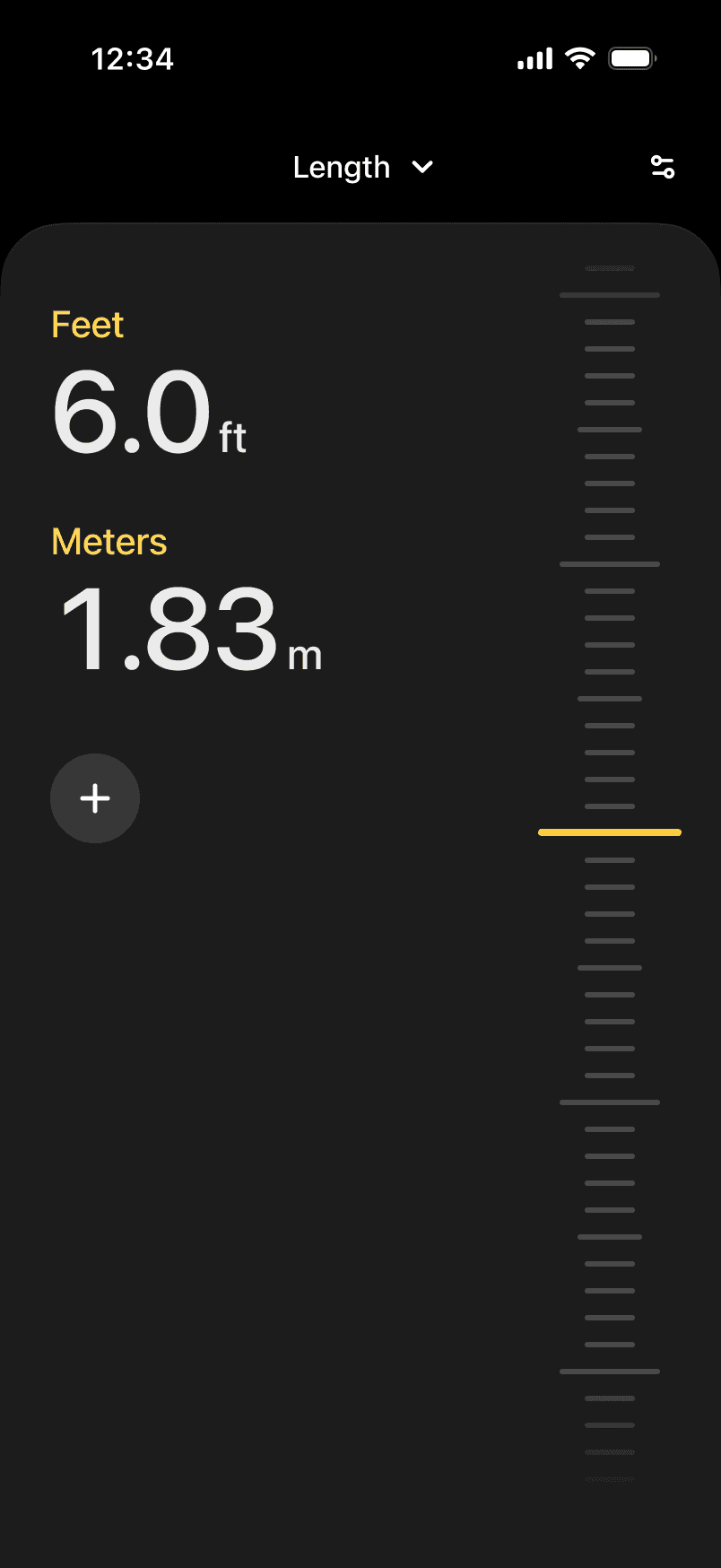
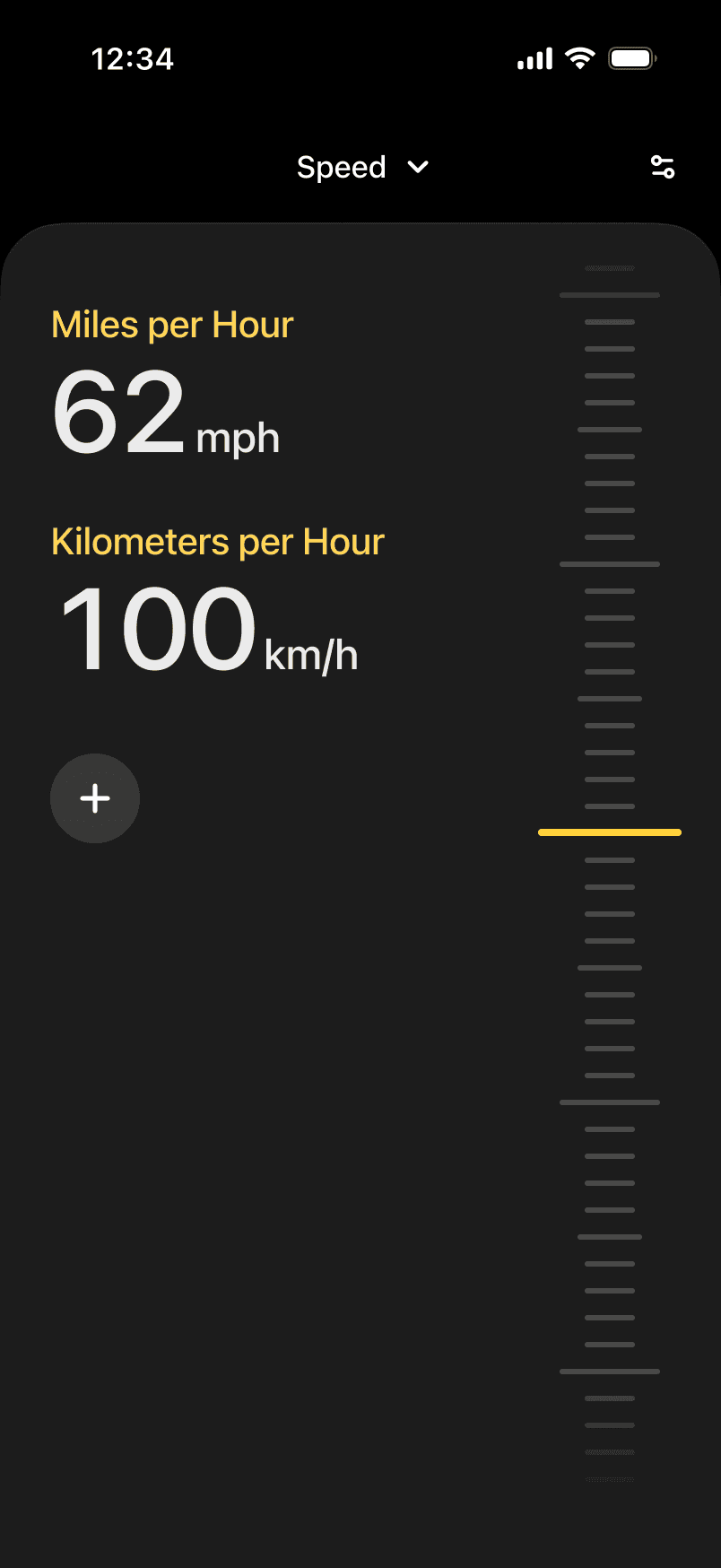
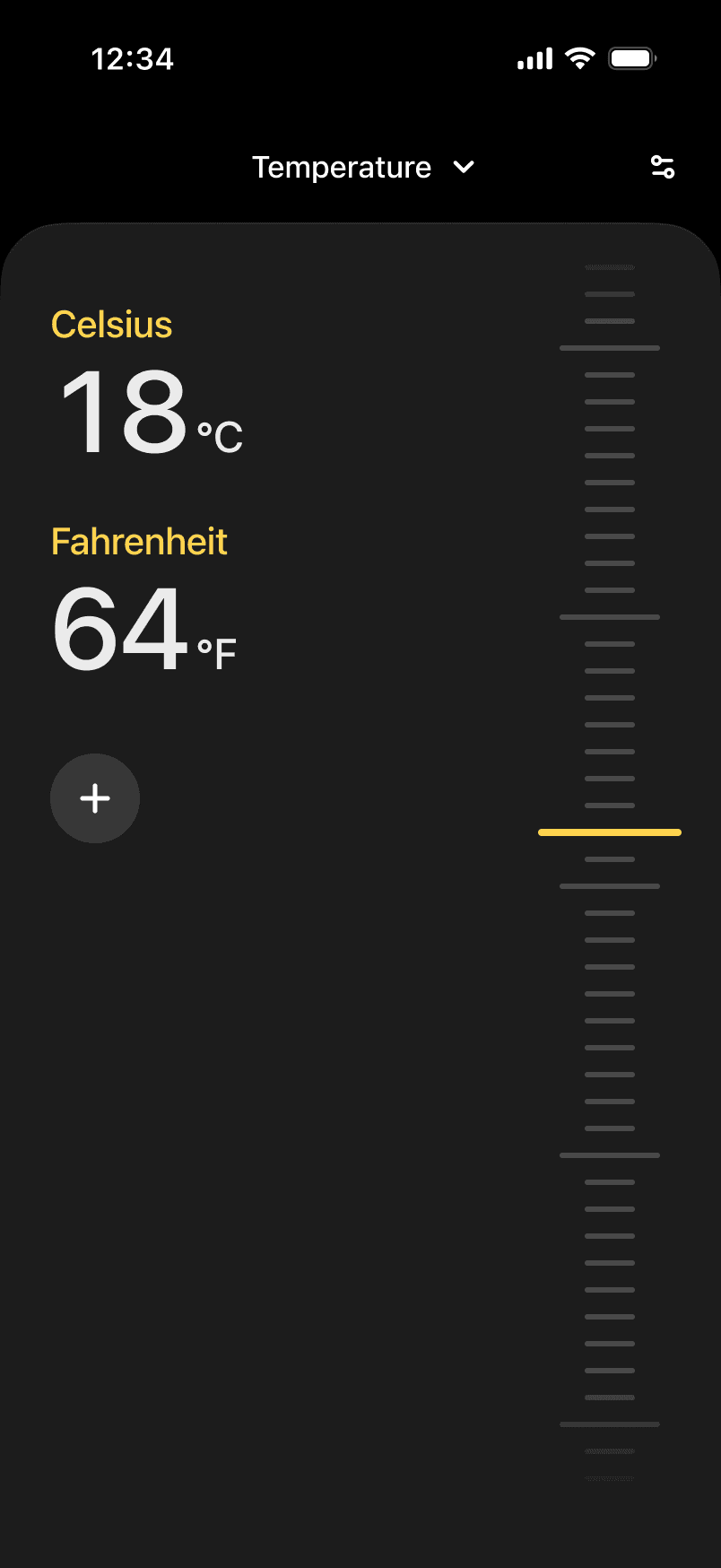
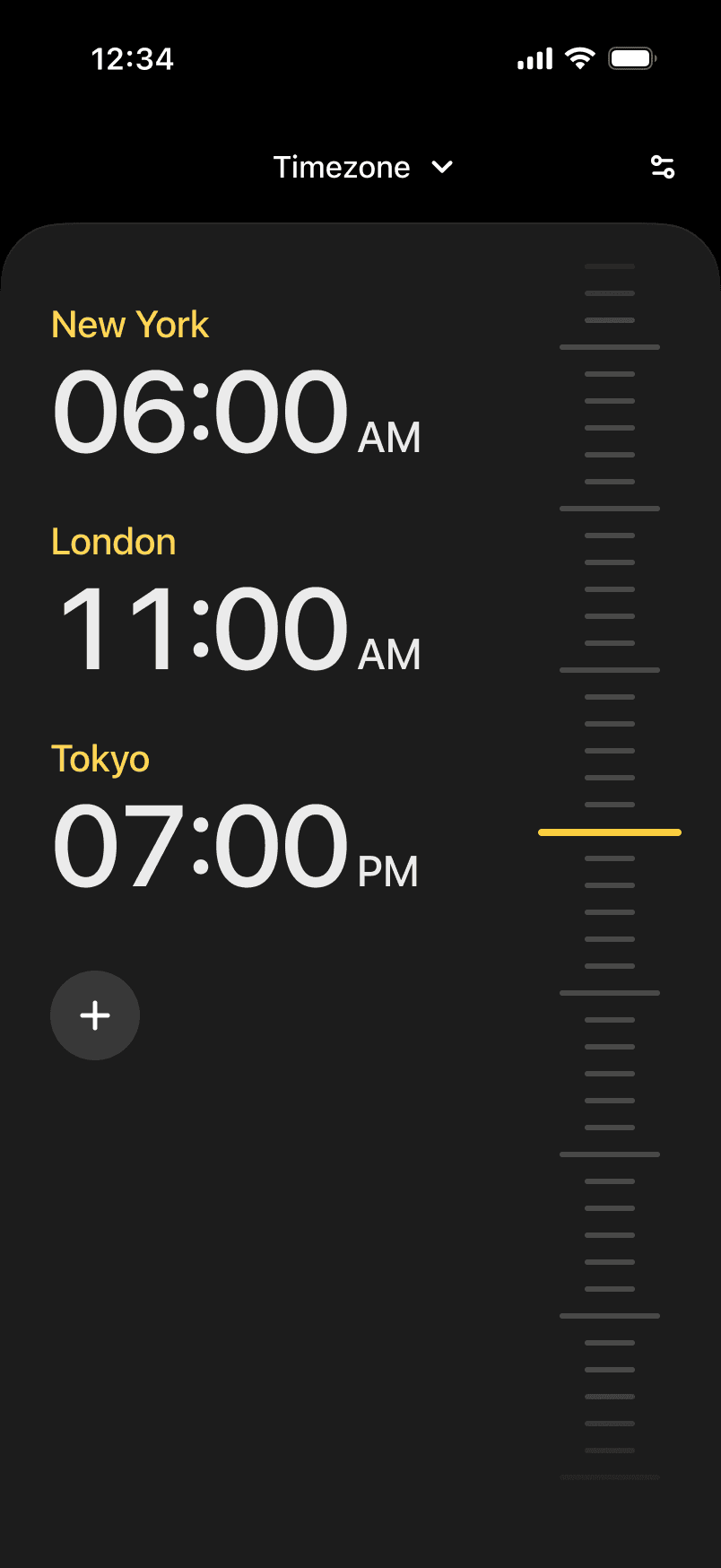
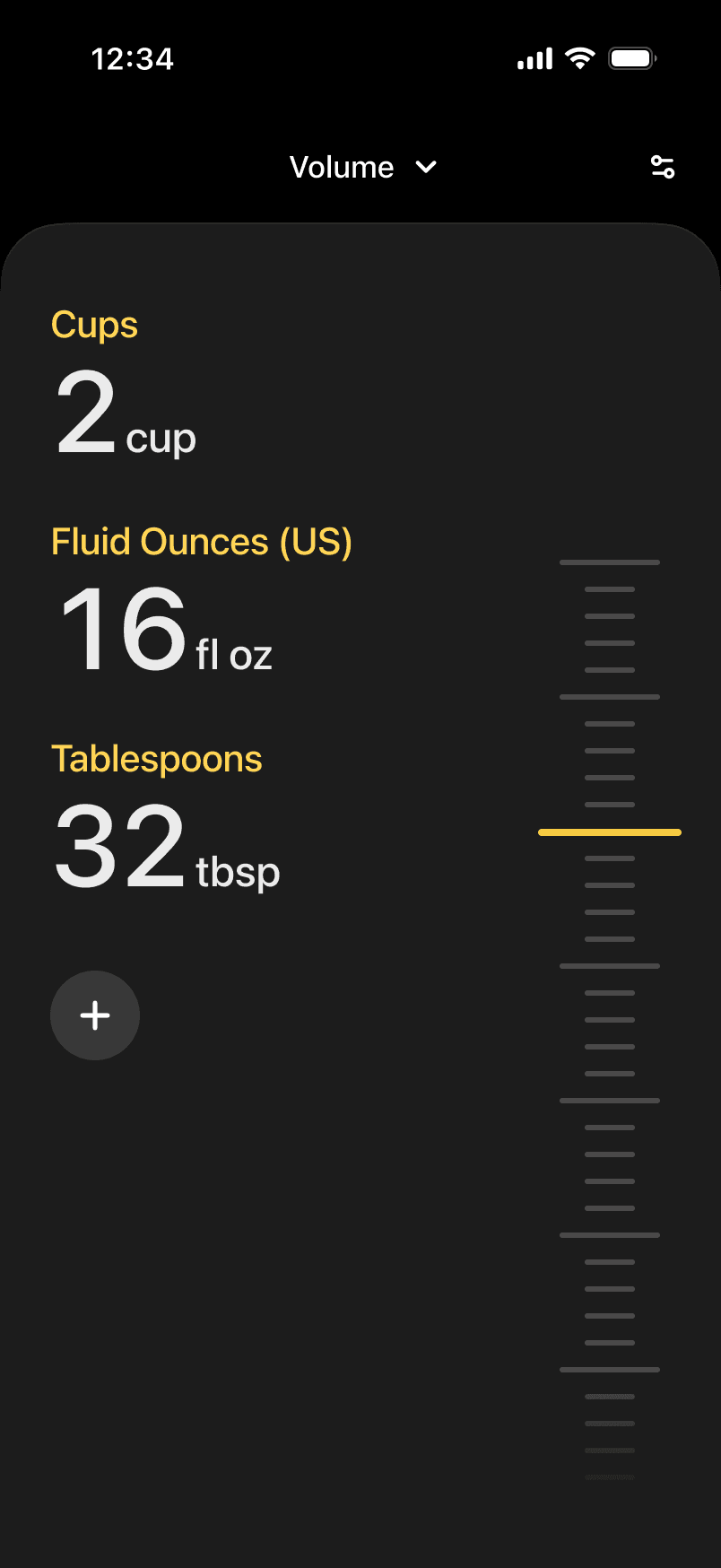
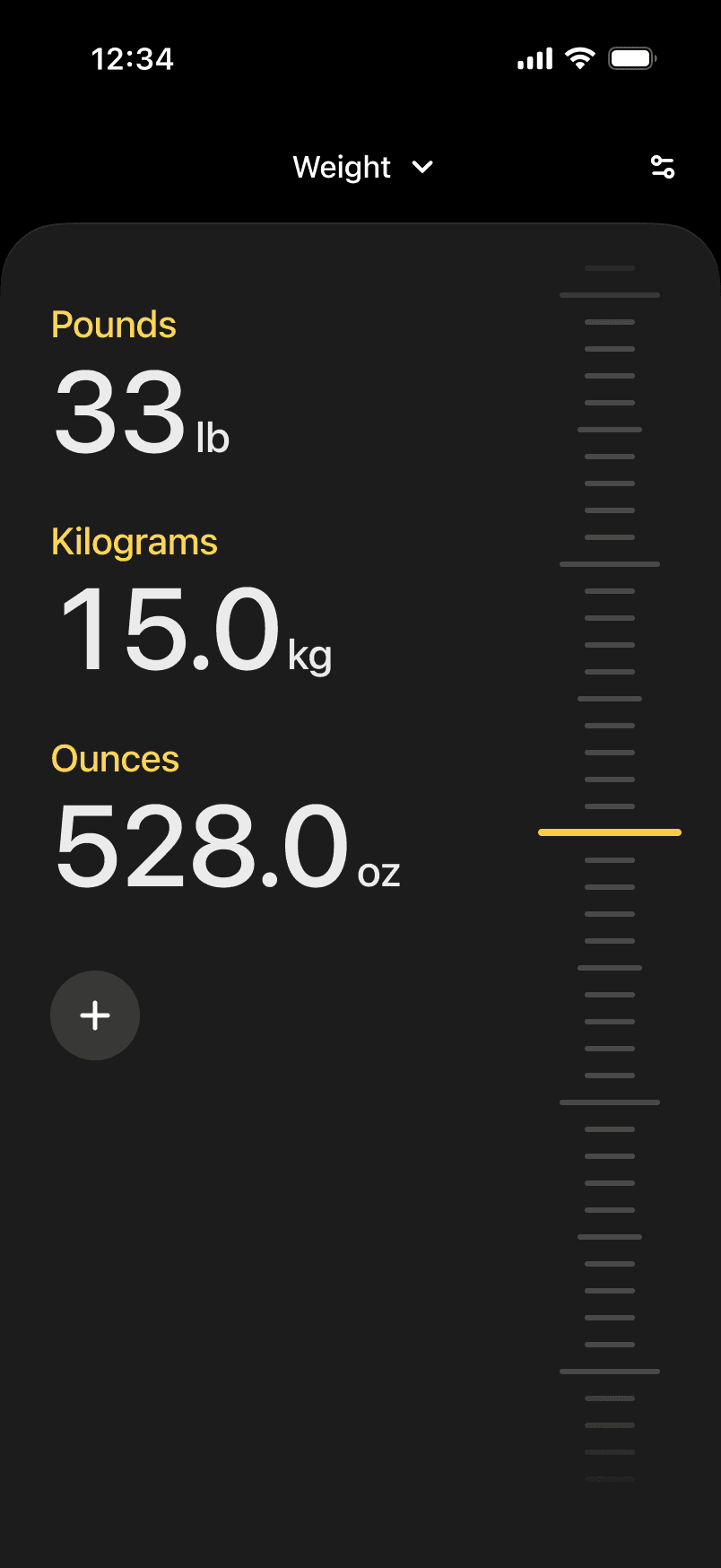
As Velo expanded into more use cases, each mode introduced new requirements. The challenge became adding depth without adding complexity.
As Velo expanded into more use cases, each mode introduced new requirements. The challenge became adding depth without adding complexity.
As Velo expanded into more use cases, each mode introduced new requirements. The challenge became adding depth without adding complexity.
As Velo expanded into more use cases, each mode introduced new requirements. The challenge became adding depth without adding complexity.

Mode switching
Switching modes became a core workflow. I developed a card-based framework with a menu users could open with a tap or swipe.
Mode switching
Switching modes became a core workflow. I developed a card-based framework with a menu users could open with a tap or swipe.
Mode switching
Switching modes became a core workflow. I developed a card-based framework with a menu users could open with a tap or swipe.

Unit editing
Each mode needed to be quickly configurable. I built interactions for adding, removing, and reordering units, letting users shape the converter around the values they need most.
Unit editing
Each mode needed to be quickly configurable. I built interactions for adding, removing, and reordering units, letting users shape the converter around the values they need most.
Unit editing
Each mode needed to be quickly configurable. I built interactions for adding, removing, and reordering units, letting users shape the converter around the values they need most.

Typed input
Currency mode exposed the limits of the ruler. I built a flexible keypad that works across modes, adding precise input when scrubbing is not the fastest path.
Typed input
Currency mode exposed the limits of the ruler. I built a flexible keypad that works across modes, adding precise input when scrubbing is not the fastest path.
Typed input
Currency mode exposed the limits of the ruler. I built a flexible keypad that works across modes, adding precise input when scrubbing is not the fastest path.
As the product stabilized, the remaining work was about making Velo feel complete and ready for launch.
As the product stabilized, the remaining work was about making Velo feel complete and ready for launch.
As the product stabilized, the remaining work was about making Velo feel complete and ready for launch.
As the product stabilized, the remaining work was about making Velo feel complete and ready for launch.

Handedness
Because the ruler is the primary control, its placement matters. I added both right- and left-handed layouts so users can choose the orientation that feels most comfortable.
Handedness
Because the ruler is the primary control, its placement matters. I added both right- and left-handed layouts so users can choose the orientation that feels most comfortable.
Handedness
Because the ruler is the primary control, its placement matters. I added both right- and left-handed layouts so users can choose the orientation that feels most comfortable.

Customization
Settings supported customization without adding clutter to the main experience. Users can tune preferences for handedness, haptics, startup behavior, and measurement display.
Customization
Settings supported customization without adding clutter to the main experience. Users can tune preferences for handedness, haptics, startup behavior, and measurement display.
Customization
Settings supported customization without adding clutter to the main experience. Users can tune preferences for handedness, haptics, startup behavior, and measurement display.

Business model
I developed a freemium model around a one-time unlock. I kept timezone mode free so Velo felt valuable to everybody, while Pro unlocked the full converter set.
Business model
I developed a freemium model around a one-time unlock. I kept timezone mode free so Velo felt valuable to everybody, while Pro unlocked the full converter set.
Business model
I developed a freemium model around a one-time unlock. I kept timezone mode free so Velo felt valuable to everybody, while Pro unlocked the full converter set.
Shipping Velo meant more than designing the app. I built a brand identity and launch package around it.
Shipping Velo meant more than designing the app. I built a brand identity and launch package around it.
Shipping Velo meant more than designing the app. I built a brand identity and launch package around it.
Shipping Velo meant more than designing the app. I built a brand identity and launch package around it.

Brand
I shaped the brand identity around the product’s design language: minimal, tactile, and inspired by the color palette of modern precision tools.
Brand
I shaped the brand identity around the product’s design language: minimal, tactile, and inspired by the color palette of modern precision tools.

Website
I designed and built a focused marketing site to explain the product, show the interaction, and give desktop visitors a fast path to download.
Website
I designed and built a focused marketing site to explain the product, show the interaction, and give desktop visitors a fast path to download.

App Store
I created the App Store materials, screenshots, pricing presentation, and launch messaging to make the product feel clear and ready from the first impression.
App Store
I created the App Store materials, screenshots, pricing presentation, and launch messaging to make the product feel clear and ready from the first impression.