Attigo

Prototyping a touch-first future for DJing

Attigo

Prototyping a touch-first future for DJing

Attigo

Prototyping a touch-first future for DJing

Attigo

Prototyping a touch-first future for DJing
Year
2008
Role
Designer & Prototyper
Overview
Attigo TouchTable was a hardware/software prototype for touchscreen DJing, created as my final-year university project before the iPad launched. It replaced the vinyl record with an interactive vertical waveform, letting DJs touch and control digital audio directly.
Year
2008
Role
Designer & Builder
Overview
Attigo TouchTable was a hardware/software prototype for touchscreen DJing, created as my final-year university project before the iPad launched. It replaced the vinyl record with an interactive vertical waveform, letting DJs touch and control digital audio directly.
Year
2008
Role
Designer & Prototyper
Overview
Attigo TouchTable was a hardware/software prototype for touchscreen DJing, created as my final-year university project before the iPad launched. It replaced the vinyl record with an interactive vertical waveform, letting DJs touch and control digital audio directly.
Year
2008
Role
Designer & Prototyper
Overview
Attigo TouchTable was a hardware/software prototype for touchscreen DJing, created as my final-year university project before the iPad launched. It replaced the vinyl record with an interactive vertical waveform, letting DJs touch and control digital audio directly.
Motivation
Attigo started as an open-ended exploration into DJ tools, interaction design, and emerging touchscreen technology. Digital DJing was becoming more powerful, but the interface still felt removed from the music itself. I wanted to explore whether touch could make digital audio feel more direct, visual, and physical. The question became simple: what if DJs could see the music and touch it directly?
Motivation
Attigo started as an open-ended exploration into DJ tools, interaction design, and emerging touchscreen technology. Digital DJing was becoming more powerful, but the interface still felt removed from the music itself. I wanted to explore whether touch could make digital audio feel more direct, visual, and physical. The question became simple: what if DJs could see the music and touch it directly?
Motivation
Attigo started as an open-ended exploration into DJ tools, interaction design, and emerging touchscreen technology. Digital DJing was becoming more powerful, but the interface still felt removed from the music itself. I wanted to explore whether touch could make digital audio feel more direct, visual, and physical. The question became simple: what if DJs could see the music and touch it directly?
Motivation
Attigo started as an open-ended exploration into DJ tools, interaction design, and emerging touchscreen technology. Digital DJing was becoming more powerful, but the interface still felt removed from the music itself. I wanted to explore whether touch could make digital audio feel more direct, visual, and physical. The question became simple: what if DJs could see the music and touch it directly?
I explored interface and hardware concepts together, looking for a way to touch digital music in a form that still felt familiar to DJs.

I explored interface and hardware concepts together, looking for a way to touch digital music in a form that still felt familiar to DJs.

I explored interface and hardware concepts together, looking for a way to touch digital music in a form that still felt familiar to DJs.

Exploring interface ideas

I explored different layouts, controls, and waveform visualizations for a touch-first DJ interface. The strongest direction was making the waveform the primary control, turning the track into something DJs could both see and manipulate directly.

Bridging UI and hardware

The vertical waveform was the unlock. Once that interaction started to make sense, I sketched hardware forms around it: screen angle, hand position, proportions, and how the unit would sit in a DJ setup.

Arriving at the design

I moved into 3D to refine the concept and bring the interface and hardware together. The final direction felt recognizable as DJ equipment, but clearly built around a new touch-first interaction model.

With an exciting product concept in hand, I started prototyping the software. After weeks of learning, building, and testing, I could touch music for the first time.

With an exciting product concept in hand, I started prototyping the software. After weeks of learning, building, and testing, I could touch music for the first time.

With an exciting product concept in hand, I started prototyping the software. After weeks of learning, building, and testing, I could touch music for the first time.

Flash interface

The UI was rendered with Flash, with waveform imagery, track browser, transport controls, and handles touch interactions. FlashServer sent UI interaction data to the audio engine.

Max/MSP audio engine

Audio playback and manipulation was handled through a custom Max/MSP patch. The system was limited, but enabled real time velocity-based playback, capable of emultating turntable interactions, including scratching.

Touch display prototype

Running the software on 3M touch panels made the interaction feel real for the first time. I could finally touch the waveform directly, and understand the experience as a physical interface.

With the software prototype working, my focus shifted to fabricating the hardware in the workshop.

With the software prototype working, my focus shifted to fabricating the hardware in the workshop.

With the software prototype working, my focus shifted to fabricating the hardware in the workshop.

Case fabrication

I fabricated the aluminium housings in the workshop, cutting and rolling sheets into the final enclosure form.
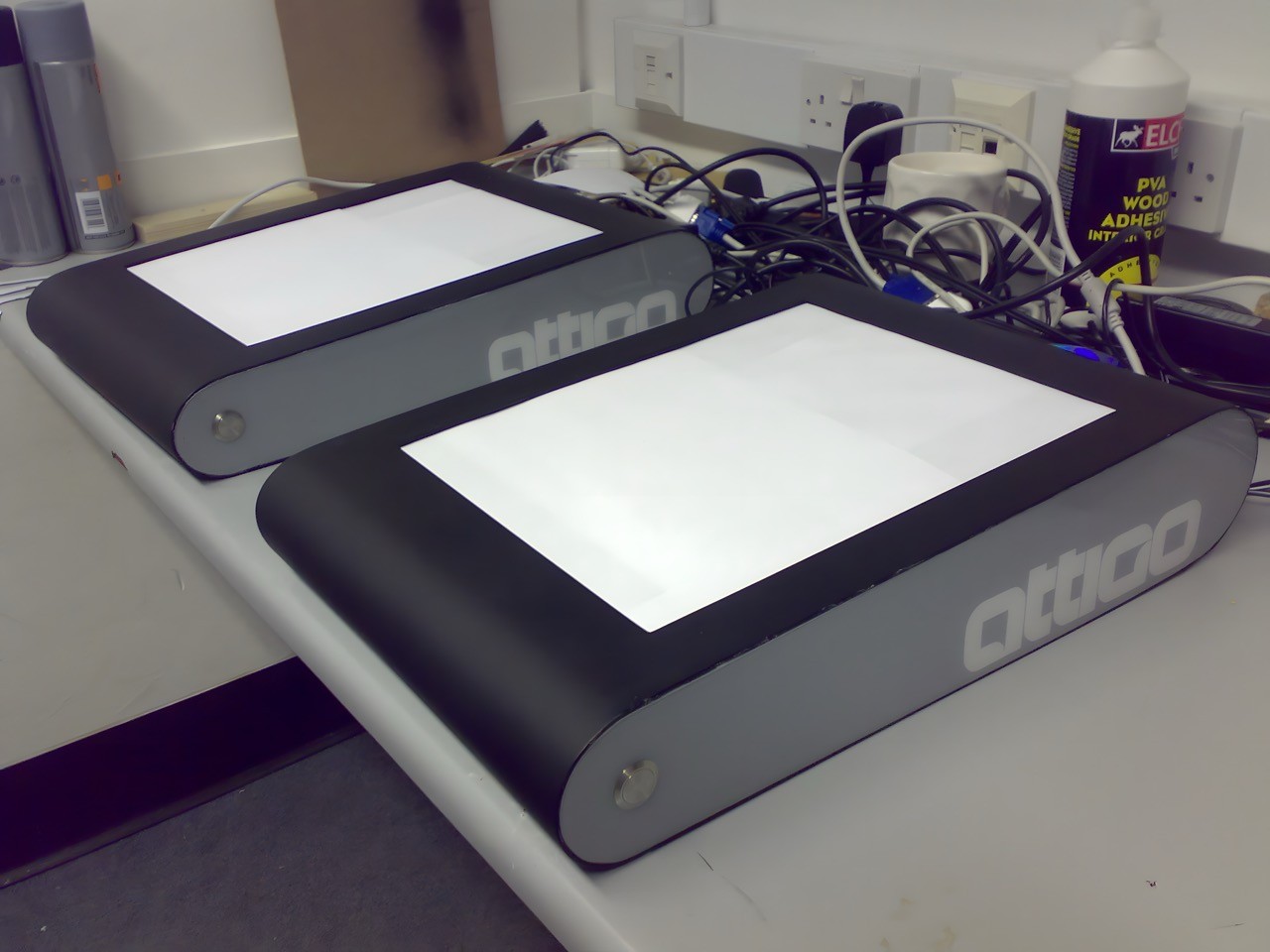
Finishing & assembly

I painted the housings, built the internal structure, mounted the displays, and assembled the side panels and electronics.

Finalized units

Seeing the units fully assembled for the first time brought the concept together: software, hardware, and interaction working as a complete DJ setup.

After posting a video online, Attigo spread quickly through music and technology communities, featured by major blogs and print magazines.

After posting a video online, Attigo spread quickly through music and technology communities, featured by major blogs and print magazines.

After posting a video online, Attigo spread quickly through music and technology communities, featured by major blogs and print magazines.

Online response

The concept gained attention across music and consumer technology sites, helping the project reach far beyond the university environment it came from.

Press coverage

Attigo was featured in several print magazines, including DJ Mag, URB, and Groove, alongside interviews about the concept and prototype.

Lasting influence

The idea of touching audio waveforms directly eventually found its way into shipped products I designed at Native Instruments, including Traktor DJ.

Reflection
Attigo taught me how powerful a prototype can be in giving an idea momentum. By building enough of the experience to feel and share, the concept became tangible in a way sketches or renderings alone could not. Much of the project pushed beyond what I knew how to do at the beginning. Learning as I went became part of the work, and helped me build the confidence to take on ambitious, unfamiliar problems. Looking back, Attigo was the launchpad for my career. It showed people I was capable of the thinking and the work, while showing me the kind of work I wanted to keep doing.
Reflection
Attigo taught me how powerful a prototype can be in giving an idea momentum. By building enough of the experience to feel and share, the concept became tangible in a way sketches or renderings alone could not. Much of the project pushed beyond what I knew how to do at the beginning. Learning as I went became part of the work, and helped me build the confidence to take on ambitious, unfamiliar problems. Looking back, Attigo was the launchpad for my career. It showed people I was capable of the thinking and the work, while showing me the kind of work I wanted to keep doing.
Reflection
Attigo taught me how powerful a prototype can be in giving an idea momentum. By building enough of the experience to feel and share, the concept became tangible in a way sketches or renderings alone could not. Much of the project pushed beyond what I knew how to do at the beginning. Learning as I went became part of the work, and helped me build the confidence to take on ambitious, unfamiliar problems. Looking back, Attigo was the launchpad for my career. It showed people I was capable of the thinking and the work, while showing me the kind of work I wanted to keep doing.
Reflection
Attigo taught me how powerful a prototype can be in giving an idea momentum. By building enough of the experience to feel and share, the concept became tangible in a way sketches or renderings alone could not. Much of the project pushed beyond what I knew how to do at the beginning. Learning as I went became part of the work, and helped me build the confidence to take on ambitious, unfamiliar problems. Looking back, Attigo was the launchpad for my career. It showed people I was capable of the thinking and the work, while showing me the kind of work I wanted to keep doing.